Sunday, March 3, 2013

Author Talks

Author Talks 

Like book talks in reading workshop, author talks are an inspiring way to begin your work each day in writing workshop. 

What are author talks?
Author talks are exactly what they sound like. They are 2-3 minute discussions about some of your favorite authors, so that your students can begin to see themselves as authors and see similarities between themselves and REAL PUBLISHED authors. 

How do you decide what authors to share? 
Start with some of your favorite authors in the beginning of the year. Your students will see how passionate you are about some of your favorite authors. They may even begin to try out some of the advice from authors in their own writing! 

In the beginning of the school year, I like to start with authors that talk about using a notebook to keep all their ideas because that is what we are doing in September, launching our writer's notebooks.

Many authors talk about doing this.

Here are a few that I like to begin with in September:

Ralph Fletcher: http://www.ralphfletcher.com/tips.html

Avi: http://avi-writer.com/writing/writing.html

Steve Jenkins: http://www.stevejenkinsbooks.com/

Lois Lowry: http://www.loislowry.com/

Choose authors that are relevant to the grade level that you are teaching. Research some of the common authors that are popular in your grade level, see if they have a website, and discover if they have advice for young writers, where they get their ideas, what inspires them, and what made them become an author. You can spend more than a day or even a week on one author. Give a few tidbits about the author and then tell some more the next day. This would also be helpful if you do an author study of a particular author in reading workshop and then discuss him/her in writing workshop. Sometimes, I even scan the classroom to see what kind of authors they choose to read to discover which author I should discuss in writing workshop. If students like to read from a particular author, typically they will want to try out some of the things that that author does in their own writing.

Again, Scholastic is another great resource. The site has some written interviews, as well as video interviews with authors. 

Visit their author index for specific authors and their interviews:
http://www.scholastic.com/teachers/lesson-plan/author-video-index

Sometimes they even have live interviews that your class can watch about specific authors. For instance, in the fall we were able to "visit" with J.K. Rowling. Next week, my students will "visit" with David Baldacci, one of the authors of the series 39 Clues, in which he will take them on a virtual tour of the Smithsonian and discuss some of the artifacts that are referenced in the book. 

For more information visit this link: http://decodinghistory.scholastic.com/

DayofDoom 196x300 Scholastic Plans ‘39 Clues Baldacci Webcast at Smithsonian American History Museum

Thursday, February 28, 2013

Book Talks

Ugh! So, not only have I not been on here in some time, but I just had a new fresh post ready to go and as I was trying to put my finishing touches on it, and then I lost it! Grr! So here it goes again because I won't be defeated!

Book Talks!

Book talks are a wonderful way to begin your reading workshop, especially in the beginning of the school year. It is important to do many of them in the beginning of the year and then maybe a couple a week throughout the year. Once you give a book talk, you will hook your readers into reading! 

Book talks are 2-3 minutes long, like a mini-commercial about a specific book in your classroom library. Try to start with books that you are excited about yourself. Your students will feed off your enthusiasm and will be anxious to read the book themselves. Reluctant readers will be more willing to choose a book to read when they see that their peers want to read a certain book that you have recommended.

 When thinking about how to give a book talk there are many different options: give a brief summary, read a section from the text, show the illustrations, describe why you like the book, why others recommend the text, or even tell a part of the text from one of the character's point of view. Make sure that you select books that are different genres, topics, authors, and series. This will help to expose your students to a variety of texts.

While giving a book talk, have your students write down the title of the book and the author in a notebook, so that they have a running list of books that they would like to read. Especially since you may only have 1-2 copies in your library and MANY students will want to read the book immediately after you have completed your recommendation. This will also help to decrease the time that students spend in the library searching for a book to read. If they have a list, they just have to review it and then locate the text. Remember to remind your students to choose a "just right" book (one that they can read on their own- not too hard or too easy).

Scholastic is a wonderful resource for book talks. The site has interviews with authors about specific books that they have written, as well as videos that recommend books to students. Visit the following site to locate your next book talk in your classroom:
 http://www.scholastic.com/librarians/ab/booktalks.htm

Once your students have heard many different book talks, show them how to give their own recommendation to their peers about the books that they enjoy from the classroom library. This will help to work on many different skills such as: summarizing, persuading, use of voice in writing, and presentation skills. 


Here are some of the books that have recently been recommended in the classroom that I team teach in:


Go ahead... try them out in your classroom and watch the books fly off your shelves!

Thursday, January 24, 2013

Boys and Reading

It is statistically shown that the majority of boys do not like to read and are often below reading level. 
 
There are many reasons for this travesty. Many reading programs don't necessarily support boy readers. Many "required" books that are used to teach reading, don't seem to interest boys. Through my reading instruction, I try my best to get boys to read. 

Here are some suggestions:
  • Begin the year by giving students a reading self-assessment to find out their reading interests
  • Talk with your boys, get to know them, show them you care
  • Make reading a reward, not a punishment
  • Show them men who read
  • Promote reading in the home
  • Talk with their fathers about reading and the importance of encouraging their son (s) to read
  • Give author talks on men writers, especially those they like
  • Make sure your classroom library has many different genres and topics that will be sure to interest boys (use that assessment to help you). Selection is everything.
  • Get fresh, new books through your Scholastic points (free books!) 
  • Think magazines, comic books, and graphic novels...as long as they are reading, who cares (for now)
  • Boys also love nonfiction! 
  • Give book talks on books that will interest boys
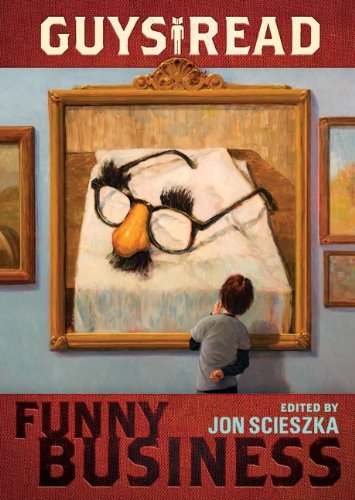
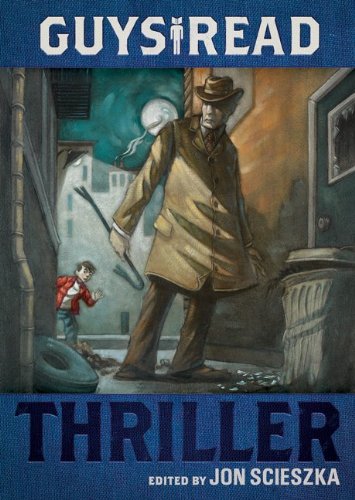
  • Use Guys Read website! Newly found discovery! Love it!

Some books that are sure to interest boy readers at the intermediate level that I have discovered this year:


Monday, January 21, 2013

My Week in Cambridge- Part 2

Okay, let's see where did I leave off? Oh, yes, I was on #6 of my week of professional development. 

Top TEN Continued....

#6 Irene and Close Reading: Close reading is NOT a new strategy. It has been around for quite some time, but people have different ideas of what it actually entails. Another aha moment was when Irene explained that it is actually in Teaching for Comprehension and Fluency on pg. 286 (I will have to make this page to show my colleagues). With the use of close reading we SHOULD NOT use harder texts with the thinking that since it is harder, students will learn and understand. How does that even make sense? That will ONLY frustrate the student and make him/her not want to read. Isn't our goal to make a community of readers? YES! There is a place for close reading in the literacy framework. It can happen through interactive read alouds, small groups, guided reading, or even guided whole group. However, selections of text should be chosen purposefully (not the whole text, unless it is relatively short). Irene emphasized that it is important to think about three things: author's purpose, organization of the text, and the big ideas. The prompting guides will be useful here to help guide your instruction. Through the use of close reading, you are creating critical thinkers if they learn to synthesize and come up with the bigger overall theme.  Okay, so now I have to think about a text to use in my classroom to incorporate this, as well. THINK....IRA's!

#7 Irene Continued: Irene had so many enlightening things to say that I think I'm just going to make a quick running list of a few last tidbits:
  • Modules (i.e. NYS on reading instruction): scripted instruction doesn't look at the student. Textbook based instruction is a way to say that we covered it; doesn't follow the learner. Where is the research to say that it is effective? Effective teachers look at a text and get behind it and teaches all 12 systems of strategic actions for comprehending text all of the time (not just one day).
  • We use REAL books to make children literate.
  • Synthesizing- keep precise!
  • Behavioral evidence in thinking- in talk and writing about reading.
  • Systematically observe and assess and bring them forward by looking at the student.
  • Get rid of the stupid stuff we give students to do! 
I could go on forever with Irene's thoughts and beliefs around reading, but let's move on for now!

#8 Continue Close Reading with Picture Books- Take a book deeper. So, if you used a book such as, Pink and Say by Patricia Polacco you could ask the group to reexamine for the deeper themes. Ask students what they notice to fuel the discussion. Rereading is a part of close reading. Once you complete a text in guided reading, looking at it again through another lens.  BOOK CLUBS are another great place to incorporate close reading.


#9 The Art of Inquiry: Bringing inquiry into all subjects, not just reading. Tie the inquiry to your unit. Students are held accountable by coming up with their questions that they want to study and research (keep these questions in a research notebook). Create inquiry circles. Inquiry makes students active participants in their own learning and creates a collaborative environment. To find out more look at:

Inquiry Circles in Elementary Classrooms (Heinemann):


#10 Word Study: As a group we reexamined the word study block and the buddy study component, in order to freshen it up and push our learners. Something that I really liked and want to bring back to my classroom is incorporating word study across the frameworks by linking it to reading and writing. For instance, if we are studying a particular principle for the week, students can find words that connect to that principle in their reading and writing and add it to a weekly word board (now, if only I could figure out where this would fit in the room where there is no more space left, especially since we have such strict fire codes!). Also, I liked the writing connection in that students can have a section of their writer's notebooks where they can add words from their weekly spelling lists that they think are interesting and that they would like to use in their writing. 

I'm very happy and excited to be back home and I'm thankful to have had the opportunity to receive more professional development this past week. I have so much to think about and to try and incorporate into the classroom. I have to keep reminding myself one step at a time, so that I don't get too overwhelmed trying to do it all! Once day at a time. I do like the idea of this blog to help me keep track of my own learning, share the things that I have learned with others, and it also gives me a spot to reflect on it all. Hope everyone has a fabulous four day week....Happy Birthday Dr. King Jr. :) 

Sunday, January 20, 2013

Becoming a Blogger...

"Everyone's doing it...why don't you?" This was the discussion that was started by my friends, colleagues, and now newly graduated literacy coaches, while we were all away for training in Boston, Massachusetts. We were all there for our annual ongoing professional development week and they were trying to convince me to start a professional blog. At first, I was quite reluctant because I had no idea what I would write about and wondered if anyone would even read the thing. So, why bother right? At least I knew that I had a few supporters out there that would read and interact with me (my literacy crew...haha). But, where would I possibly find the time? We are all so burnt out already, now they want me to add another thing to my plate? Are they serious?  Well, I guess they did a great job persuading me because here I am trying to figure out how all this works and definitely feeling a little frustrated trying to get this started. My intentions for this blog are to share some of the many great things that I'm trying out in my classroom as a literacy teacher, share some of the things I'm perfecting or trying to figure out, my growth as a professional, and to connect to the world of literacy. So, here it goes....

My Week in Cambridge for Ongoing Professional Development

 
I have learned so much from my year and 1/2 long training to become a literacy coach at the intermediate level. Now, it was time for my ongoing training that will happen every year in January for my continuing professional development at Lesley University. At first, I felt somewhat intimidated being in a large room full of literacy coaches, who have so much more experience than I have, being that I'm only in my field year. However, it was easy to quickly warm up to everyone and get into the swing of things. I was so excited to get a chance to have a day long workshop with Irene Fountas, as well :) The week flew by and I'm so excited to share some of the great things that I have learned! Where do I begin?


Here are my TOP 10 experiences from my trip to Boston:

1. Genre Study- We received the bundle of Genre Study by Fountas & Pinnell. It is their newest addition to their plethora of professional development resources. The bundle published by Heinemann comes with the textbook Genre Study, the Quick Guide, the Prompting Guide for Fiction, and the Prompting Guide for Nonfiction, Poetry, and Test Taking. I'm so excited to dive in and try out some genre studies in my classroom next quarter. Where to begin?
 

2. Article, "Guided Reading: The Romance and the Reality": It is always a good thing to get back to your roots and reevaluate your teaching. That is exactly what we did in terms of guided reading. We read the new article that Fountas & Pinnell contributed to the Reading Teacher journal and discussed guided reading as an instructional means to teach reading in small group. It was quite helpful to review the theory and rationale behind the process. Together, we discussed how we could use this article to help our teachers obtain a better understanding of how to use guided reading in their classrooms. See for yourself, by visiting the following link:

3. Reviewing Running Records: Again, getting back to basics. I always find it helpful to review the process of taking a running record, analyzing, and discussing together in a group setting, what you would do next as a teacher. For instance, we all listened to a student read, analyzed her reading and her comprehension of the text, and then visited our Continuum to decide where we would focus our teaching if she were our student. I want to do this with my teachers, as well. So much to do, so little time.

4. Coaching statement by Irene Fountas: "This was our best thinking at the time." I believe that this is so powerful. In anything that we do, things change and things evolve. Our thoughts and beliefs are always changing because our understanding is always evolving. That is what being a professional is all about. 

5. Looking at the Common Core Standards with Irene Fountas: Once Irene said that we need to look at these standards as goals, it was definitely an aha moment for me, as well as many of my colleagues. It makes so much sense. We get so caught up in teaching these standards, and hoping that our students meet these standards, that I think we forget that they are GOALS! A goal is not something that will definitely be met, but as long as we are striving to get there that is the point; working to meet/obtain that so called goal. While we are on the topic of the CCSS, Irene brought up another great point! Where is the research? Where is the research to support the CCSS? Look at the end of the CCSS, is there any? No, there isn't. So, why do we as a state, as a nation accept them? This is a question that I am still pondering myself. Who says this is best for our students?

Okay, I need a little break...my final five will be added, hopefully tomorrow!